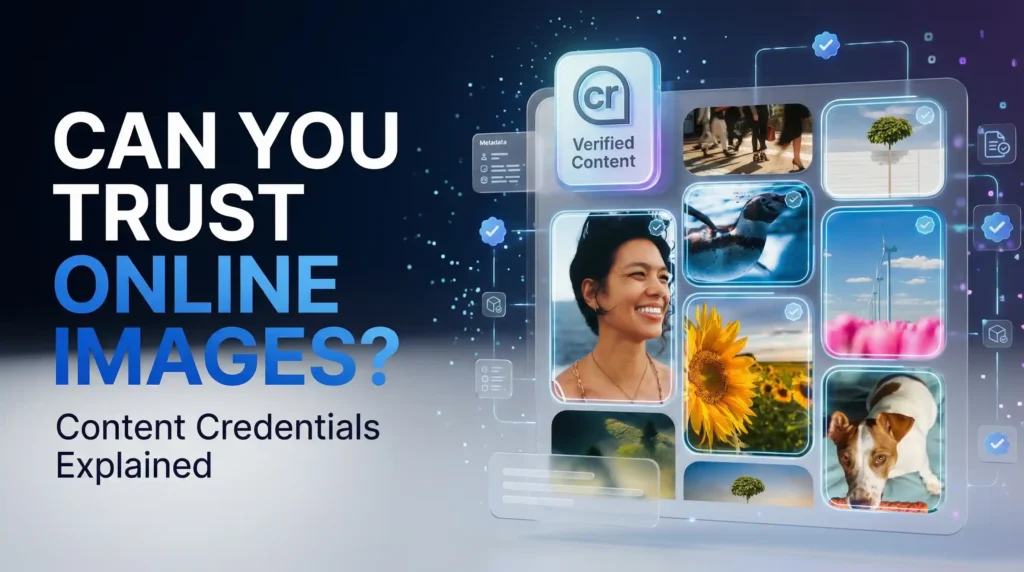
Build on trust on the digital content by checking origin, creation, and editing history at a single click.
Introduction
Content Credentials is an artificial intelligence powered product, which is meant to combat the rising issues of deepfakes, synthetic media and voice cloning. It allows users to identify the source and authenticity of online content by allowing them to verify the reliability of the content and identify deepfakes. Content Credentials logs significant information like the origin of the content, the process of its creation, and the history of editing online information through the use of AI content verification. Such transparency enhances the credibility of the media as well as enables people to easily establish the credibility of digital content. With the ongoing misinformation on the internet, platforms such as Content Credentials are critical in ensuring that there is trust and responsibility in the digital ecosystem.
The tool would suit content creators, journalists, marketers and ordinary internet users who would wish to ascertain the authenticity and credibility of media prior to the sharing or citation of media. Content Credentials allows organizations and individuals to fight misinformation and safeguard intellectual property and rightfully credit original creators by enabling them to verify content accessibly. It is in the AI Detection category as it offers a global standard of accountable and tamper-evident content verification.
What Is Content Credentials?
Content Credentials is a technology that enables users to see checked metadata of a digital content, such as its origin, creation instruments and editing history. With a single tap on a Content Credentials pin, users can get instant access to such insights assisting them in seeing the difference between genuine content and fake media.
The platform presents itself as a content authenticity solution, which provides open standards and tampering detection to verify trust through verification. Content Credentials not only solves the increasing popularity of the synthetic media, but it also allows content creators to be properly recognized and allows the viewers to make informed choices regarding the media they watch.
Key Features
Origin Verification:
Gives information on the creation location and creation of content in detail.
Editing History Access:
Reveals changes that have been done on the media such as retouches or editing.
Synthetic Detection Deepfake:
Determines AI-generated modifications or manipulated media.
Credit and Recognition of Content:
Creators of helps are credited and attributed by the audience.
Tamper Detection:
Flags FlagS are authorized or suspicion of changes to the media files.
Global Implementation:
Over platforms, encouraging transparency, always.
One-Click Access:
Users can take a look at metadata in an instant with no elaborate processes.
Open Standards Compliance:
Constructed on generally approved standards to bring about interoperability and accountability.
Use Cases
News Verification and Journalism:
Confirm the originality of photos, videos, and audio material in reporting.
Content Creation & Marketing:
Adequate attribution and develop credibility with audiences.
Social Media & Platforms:
Identify content manipulation prior to publication in order to diminish the spread of misinformation.
Education & Research:
Ensure originality of reference materials in academic or professional writing.
Legal and Intellectual Property:
Prove the provenance of track content to stop illegal use or copyright infringement.
Pros & Cons
Pros:
Offers real-time content authentication and history manipulation.
Fight against misinformation and deepfakes.
Gives creators due credit and attribution.
Cons:
Depends on whether metadata is available; partial metadata can be used to restrict checking.
The utility can be different according to platform use and integration.
Pricing & Access Model
Content Credentials is free to use and therefore affordable to both individual users and creators of all sizes. Its open standard strategy means anyone can implement or verify content without any subscription restrictions, and offers a competitive edge on transparency-minded programs over proprietary verification systems.
Who Should Use This Tool?
Content Credentials is the best choice of journalists, social media managers, researchers and content creators who have to verify the authenticity of the media on the internet. Unexperienced users enjoy its one-click verification system, whereas professional teams can integrate it into workflows to practice accountability and transparency on platforms. It fits all individual users, as well as organizations with a massive amount of digital content.
Conclusion
Content Credentials is a solution that is free and available to help verify the validity of digital content. The fact that it gives comprehensive metadata about origin, editing and creation techniques enables users to make wise choices and safeguard the rights of creators. As a world leader in content verifying with the seal of the tamper-evident content, it aids in combating misinformation and instills the confidence in the online media, being non-problematic to use and able to be integrated.
FAQs
1. What is Content Credentials?
Content Credentials One of the technologies is Content Credentials which enables users to verify the origin and creation technique of the digital media as well as its editing history.
2. What is Content Credentials?
It relies on embedded metadata and verification standards disclosing information on when, where and how content was made or changed.
3. Is it possible that Content Credentials can identify deepfakes?
Yes. It can detect media created by AI or tampering by showing editing history and suspicious changes.
4. Does Content Credentials have free usage?
Yes. Content Credentials is free of charge and aimed at being accessible to people, creators, and organizations.
5. Who are Content Credentials intended to be used by?
The verification of authenticity of digital media can be useful to journalists, content publishers, marketers, educators, as well as social media users.
6. What does Content Credentials display?
It is able to show information about the creator, the tools that have been used to edit, history of the modification, and the source of the media file.
7. Is Content Credentials applicable to every digital media?
It is most efficient with content containing supported metadata or that which has been created with tools incorporating the Content Credentials standard.
8. What is the significance of Content Credentials?
It aids the fight against the fake news, identifies the manipulated media, and gives the creators the right credit in their work.

Muhammad Asif is the Founder and Growth Engineer at WebNextSol, with 5 years of experience building AI-powered systems that help businesses save time, generate leads, and grow. He combines expertise in WordPress, automation, cloud architecture, and SEO to deliver practical, results-driven digital solutions.